
Loading...
Serving Durango, CO and surrounding areas. (970) 844-8919
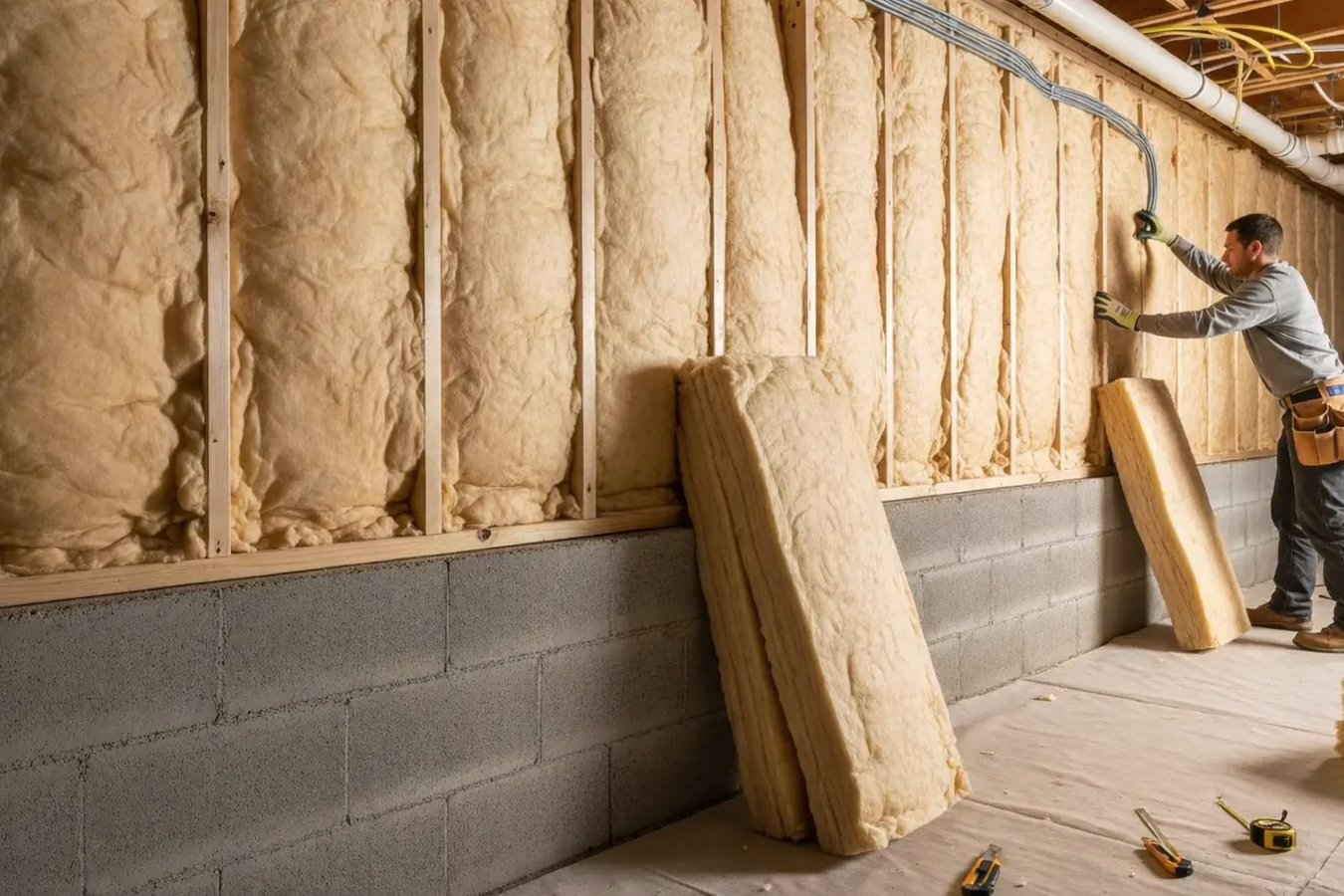
An uninsulated basement bleeds heat all winter long. We insulate basement walls and rim joists in Durango homes so your furnace runs less and your home stays comfortable from the floor up.
Basement insulation in Durango, CO focuses on the foundation walls and the rim joist - the band of wood where your floor framing meets the top of the foundation - and most projects for a standard single-family home are completed in one to two days.
Many homes in Durango were built in the 1960s through the 1980s, when basement insulation was minimal or nonexistent. That means foundation walls that are bare concrete all winter, and rim joists that let cold outside air pour in right above the foundation. The result is a basement that feels cold even when the rest of the house is warm, and a furnace that works harder than it should through Durango's long heating season.
If your home also has a poorly sealed crawl space, addressing both at the same time is worth discussing - the two areas work together as part of the same thermal envelope.
If your furnace runs constantly during a Durango cold snap but the basement stays noticeably colder than the rest of the house, heat is escaping through uninsulated walls. You may also notice the floor above the basement feels cold underfoot, especially in the morning. This is one of the most common complaints from owners of older Durango homes.
Run your hand along the top of your basement wall where it meets the floor framing. If you feel cold air - especially in the corners - the rim joist in that area is likely uninsulated. In Durango's winters, that gap lets in air that is well below freezing, making the whole basement uncomfortable.
White, powdery deposits or water staining on your concrete basement walls after Durango's snowmelt season are a sign of moisture moving through the foundation. Insulation should go in after any moisture issue is resolved, but the presence of these signs also tells you the walls are unprotected and losing heat all winter.
If your gas or electric bills have increased over the past few winters without a clear reason, an uninsulated basement is a likely contributor. Durango's heating season runs roughly from October through April, and an uninsulated basement can account for a meaningful share of that cost.
We insulate basement foundation walls using spray foam applied directly to the concrete, which both insulates and air-seals in one pass. For homeowners who prefer a different approach, rigid foam board panels are another solid option for foundation walls - both materials outperform fiberglass batts in a below-grade application. We also insulate the rim joist, which is the most overlooked source of cold air entry in older Durango homes and one of the highest-impact areas to address.
For homeowners finishing their basement into a living space, we recommend insulating before drywall goes up - it is far simpler and less expensive than retrofitting after the walls are closed. If your project also involves closed-cell foam insulation for other parts of the home, we can coordinate that work as part of the same visit.
Spray foam or rigid foam board applied to concrete foundation walls, stopping heat loss at the source for homes with uninsulated or under-insulated basements.
Targeted sealing and insulation of the band joist where floor framing meets the foundation - a high-impact fix for cold basement corners and drafty ground floors.
Full basement wall and rim joist insulation before drywall, ideal for homeowners converting basement space to a bedroom, office, or living area.
Assessment and replacement of outdated or inadequate insulation in older Durango homes, often paired with air sealing to meet current energy code standards.
Durango sits at roughly 6,500 feet with average winter lows well below freezing and temperatures that occasionally drop into the single digits. Colorado places Durango in a climate zone that requires significantly more insulation than warmer states - which means your project will use thicker or denser materials than a comparable home in Denver. A large share of Durango's housing stock was built in the 1960s through 1980s, when basement insulation was minimal. If your home is in that age range, there is a good chance your basement walls have little to no insulation, and the rim joist may be completely unprotected.
We serve all of Durango and the surrounding communities, including Bayfield and Ignacio. Homes throughout La Plata County face the same cold winters and the same older housing stock challenges. The U.S. Department of Energy estimates that properly insulating and air-sealing a basement can reduce a home's total heating and cooling costs by a meaningful amount over time - and in Durango, where the heating season runs roughly October through April, those savings accumulate steadily year after year. Learn more at energy.gov.
We respond within 1 business day. We will ask a few basic questions - the age of your home, your basement size, and whether you have had any water issues - so we can come prepared for the assessment.
We walk through your basement, inspect the walls and rim joist, check for moisture signs, and measure the space. You receive a written estimate within a few days, along with a plain explanation of what we found and what we recommend.
We handle the building permit application with the City of Durango so you do not have to. Scheduling can book out two to four weeks during peak fall season, so reaching out early gives you better options.
The crew works systematically around the basement, starting with air sealing gaps before adding insulation. Most projects finish in one to two days, and we do a final walkthrough before leaving so you know exactly what was done.
We serve Durango and surrounding La Plata County communities. No pressure, no obligation - just a straight assessment and a clear written estimate.
(970) 844-8919Durango's spring snowmelt can push water against foundation walls. We check your basement carefully before any material goes in. If we find an active moisture issue, we tell you plainly and help you understand your options - rather than covering up a problem that will cost more to fix later.
We pull building permits for all applicable projects in Durango. That means a city inspector signs off on the work - it is not just our word that it was done right. That documentation protects you if you ever sell the home and a buyer's inspector asks questions.
We have worked on homes across Durango and La Plata County since 2019, which means we understand the specific challenges of older housing stock, high-altitude cold, and the building codes that govern work here. We are not a regional crew passing through.
Colorado's energy code requires more insulation for basement walls than many warmer states. We know the current requirements for this climate zone and design every project to meet or exceed them. The Colorado Energy Office provides guidance at energyoffice.colorado.gov if you want to read the standards yourself.
Every one of these points matters more in a mountain climate like Durango's, where cold winters are long, older homes are common, and getting the work right the first time saves real money. We aim to be the contractor you call back - not the one you regret hiring.
Closed-cell foam is one of the top choices for basement walls, offering both insulation and moisture resistance in a single application.
Learn MoreIf your home has a crawl space alongside or instead of a full basement, this is the service to start with.
Learn MoreFall scheduling fills up fast in Durango. Reach out now to lock in your project date and make sure your home is ready before the first hard freeze.