
Loading...
Serving Durango, CO and surrounding areas. (970) 844-8919
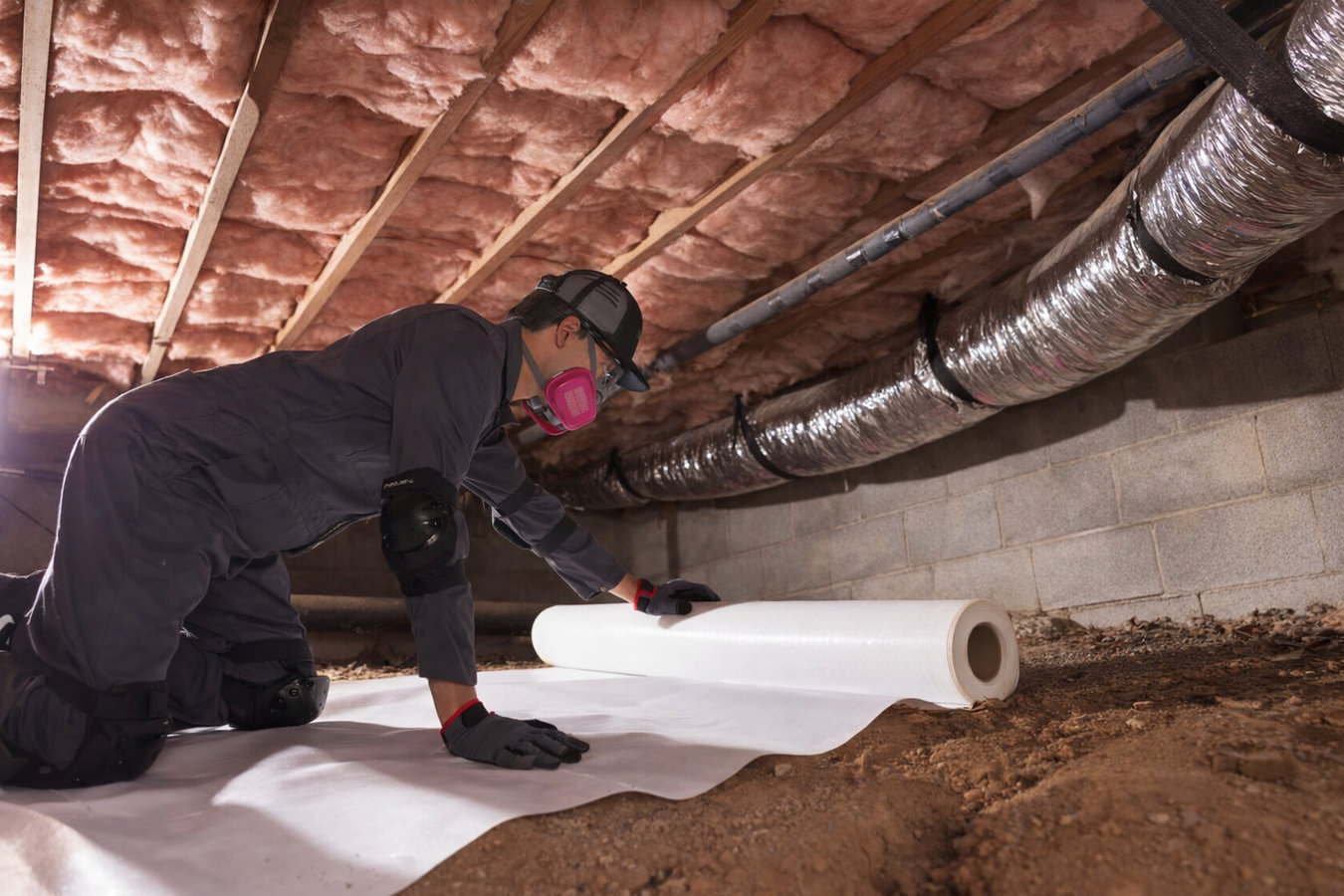
Ground moisture rising through an unprotected crawl space silently damages your floor joists, insulation, and framing over years. Professional vapor barrier installation cuts off the source and keeps your home dry.
Vapor barrier installation in Durango means laying a sheet of heavy-duty plastic across the bare dirt or concrete floor of your crawl space to block ground moisture from rising into your home's structure. The crew overlaps every seam, tapes them with material rated for damp conditions, and fastens the edges to the foundation walls so nothing shifts. Most standard crawl spaces are finished in a single day, and all the work happens entirely under your house, not in your living space.
Many Durango homes, particularly those built before the 1980s, have bare dirt crawl spaces with no barrier at all, or barriers that have long since degraded. If your home is older and has never had this work done, there is a real chance the wood framing under your floors is absorbing moisture every day without your knowing it. The EPA identifies moisture control as the most effective step a homeowner can take to prevent mold and structural damage, and a vapor barrier is the most direct way to achieve it in a crawl space.
Vapor barrier installation pairs naturally with crawl space vapor barrier services for homes needing a ground cover only, and with attic air sealing for homeowners who want a complete moisture and air management approach from foundation to roof.
If certain rooms feel noticeably colder than the rest of the house, especially over a crawl space, moisture may be undermining your insulation's ability to do its job. In Durango's winters, where overnight lows regularly drop well below freezing, a damp crawl space makes your heating system work harder and your floors feel like they belong in a different house.
That smell is not just unpleasant - it signals that moisture and possibly mold are active somewhere below your living space. In Durango, this smell often intensifies in late spring when snowmelt saturates the ground around and beneath the home. If you notice it most strongly after a warm spell following heavy snow, the crawl space is the likely source.
Moisture-damaged floor joists and subfloor panels often announce themselves through sound and feel before they become a visible problem. If certain spots in your floor have developed a new creak, a slight give underfoot, or visible warping along the edges of hardwood planks, moisture from below may be the cause. This is worth investigating before the damage spreads.
If your home was built before the 1980s and you have never had anyone look under it, there is a real chance there is no vapor barrier, or one that is long past its useful life. Many older Durango homes were built with bare dirt crawl spaces that were never updated. You do not need to see a symptom to have a problem.
We start every job with an on-site crawl space assessment - no phone estimates, no guessing at what is under your home. We check the size of the space, how accessible it is, whether there is existing moisture damage, and what kind of barrier, if any, is already in place. For straightforward ground cover jobs, we lay the barrier material starting from the far end of the space, working toward the exit, overlapping each section by several inches and sealing every seam with tape designed to hold in damp conditions. The edges get fastened to the foundation walls so the barrier stays in place over time and does not shift under foot traffic.
For homes where a ground cover alone is not enough, we also install full wall coverage as part of a crawl space vapor barrier encapsulation, and we coordinate that work with attic air sealing for homeowners who want a complete approach to moisture and air management across the full home envelope. Handling multiple zones in one project is more cost-effective than returning separately for each.
Best suited for homes where bare dirt or a degraded old barrier is the primary issue - covers the floor completely to block moisture at the source.
Best suited for homes with persistent humidity, a history of standing water, or crawl spaces being upgraded for use as clean storage space.
Best suited for older homes where the existing plastic has torn, shifted, or been damaged by pests or foot traffic and is no longer doing its job.
Best suited for homeowners who want both moisture protection and reduced air infiltration in a single project, addressing the crawl space and attic together.
Durango sits at roughly 6,500 feet elevation and experiences significant temperature swings between day and night, especially in spring and fall. That repeated freezing and thawing pushes ground moisture upward more aggressively than in lower-elevation climates, meaning crawl spaces here are under more consistent moisture pressure than in many other parts of Colorado. When Durango's heavy snowfall melts - often rapidly in March and April - the ground becomes saturated and that moisture vapor moves straight up into unprotected crawl spaces. Homeowners in Durango often notice the effects in late spring: musty smells, cold floors, or condensation on pipes under the house.
Durango's semi-arid climate can mislead homeowners into thinking moisture is not a concern - the outdoor air feels dry, so the crawl space must be fine. But crawl space moisture comes from the ground, not the air, and even in dry climates, soil moisture is a persistent source of vapor. Homeowners in communities like Hesperus face the same high-altitude freeze-thaw pressure and benefit from the same protection. The U.S. Department of Energy identifies moisture control as one of the highest-value improvements homeowners can make to protect their home's structure and energy efficiency.
When you reach out, we ask a few basic questions - the age of your home, whether you have noticed any moisture symptoms, and whether you know if there is an existing barrier. We will schedule a time to come look at the crawl space in person and respond within one business day. No honest contractor can give you an accurate price without seeing the space first.
We access your crawl space through the hatch and check the size, how accessible it is, whether there is existing moisture damage, and what barrier, if any, is already in place. This visit typically takes 30 to 60 minutes. A written estimate follows within a day or two so you have a clear scope and price to review.
The crew enters the crawl space and begins laying the barrier material across the floor, starting from the far end and working toward the exit. Every seam is overlapped and sealed with tape rated for damp conditions. Edges are fastened to the foundation walls. Most standard crawl spaces are finished in a single day.
Before the crew leaves, we show you photos from inside the space or invite you to take a look yourself. This confirms the work looks complete with no gaps or loose edges. If a permit was required, we coordinate the county inspection and share the results with you.
No pressure, no phone-only quotes. We look at your crawl space first, then give you a written price you can compare.
(970) 844-8919Every estimate comes after an in-person crawl space assessment, not a phone conversation. We look at your actual space - its size, accessibility, existing conditions - and give you a written quote with a clear scope. No surprise charges on installation day.
Many homes in Durango's historic core and surrounding neighborhoods were built before moisture protection was standard. We have worked on pre-1980s homes across La Plata County and know what to expect - from low crawl space clearance to degraded old barriers that need removal before new material goes in.
When your project requires a permit through La Plata County or the City of Durango, we handle that process. Permitted work gets inspected, which gives you documentation that the job meets local standards - something that matters when a home inspector or buyer asks about it.
Crawl space work is invisible once it is done, but that does not mean you have to take our word for it. We show you photos taken inside the space during installation, or walk you to the access point so you can look in yourself and confirm complete coverage before we pack up.
These commitments matter most for work that happens in a place you cannot easily see yourself. A contractor who shows you the finished job, pulls permits when required, and gives you a written quote before starting is one worth trusting with the structure under your home.
Seal gaps and penetrations in the attic floor to stop conditioned air from escaping and cold air from entering your living spaces.
Learn MoreGround cover vapor barrier installation for crawl spaces where the primary need is blocking soil moisture from rising into the home.
Learn MoreBeat the spring snowmelt season - call now to get on the schedule before the ground saturates and crawl space moisture pressure peaks.